Bowsprite: A New York Harbor Sketchbook

grey day

Posted in Fleet Week, warships by bowsprite on 2010/02/07

from Fleet Week 2008

a docking in cherbourg

This story is told by Sandy Eames, a tallships sailor, so it must be true:

A schooner came into Cherbourg, France to dock. As it approached the wall, its bowsprit impaled a 2CV. The skipper put her into reverse, but it as the waters would have it, the bow lifted up as it backed out, and the boat took the little car out with it. And as luck would have it, the cafe overlooking the dock was full of diners who could testify that Sandy’s tale is true.

Si vous etiez present lors de cet evenement, merci de nous envoyez votre temoignage pour confirmer sa veracite!

I love the rich colors of Technicolor and Kodachrome! The 1964 film, Les Parapluies de Cherbourg, however, was shot on the unstable Eastman negative stock. The director, Jacques Demy, knowing that the negative would fade quickly, had three color bands shot on black and white negative, and thirty years later, created a new color print that is lavish and rich.  The entire film’s dialog is sung! it takes a bit of getting used to, all composed by the incredibly prolific Michel Legrand, who also helped to digitally remaster the score for the new version. The experience is something else: elegant dresses matching the wallpaper, beautiful old painted numbers on the bows of fishingboats, sailors in their uniforms, umbrellas, cobblestones, a sweeping, teary score… Probably not shown on a tug flatscreen soon, but here is it, because it is beautiful!

Ah! restoration. It ain’t just for ships.

And, in a “of all the gas joints, in all the towns, in all the world, she walks into mine” moment…

(click on the youtube link, then on “cc” to view subtitles)

tallships toile, frazil pizza print

Hello, Toile-Lovers! go to Spoonflower to vote for this week’s Fabric of the Week. I think the contest ends thursday. Spoonflower is a site where you can design your own fabric, and buy it: no minimum order! the marvels of the modern age!! I like that you can vote for as many designs as you like.

the Tallships Toile features the Bounty, Lettie, Picton Castle, Pioneer and the Wavertree!!! click on it at the Spoonflower site if you like it; if you do: thank you!

Coming soon: the VOSS print! Be the first in your waterfront condominium to upholster your sofa in the latest and greatest in oil spill recovery!! the VOSS print features heros as the USCG Rankin, the Bainbridge and your friendly neighborhood Medium Response Unit!!! (VOSS – Vessel of Opportunity Skimming System, as brought to your dock by the National Strike Force)

Coming soon: the Driftwood print! drape your windows with the Driftwood print, throw a cocktail party, and wow your guests as you walk out in the matching dress or smoking jacket!!!

and this just in! do you recognize this print?

yes! it’s Frazil Pizza! as created by the talented textile artist, ODocker, who reads blogs before lunch. Order your rolls of Frazil Pizza fabrics today! Toss those lines in style! upholster your boat cushions! wallpaper your galley or marine head with this eye-catching print!

frazil ice

Posted in ice by bowsprite on 2010/01/13

Sorry, no sound. The slushing of the salty icewater is mesmerizing, but the camera picked up too much wind. This is taken just north of pier 40 on North River where the noble fireboat McKean and the beautiful steamship Lilac, the old USCG lighthouse tender are docked.

Could any of this have drifted down by some shaking going on upstream? See Tugster icebreaking on Rondout Creek with Matt and the tug Cornell.

ice breaking on the raritan river

Rare is the chance to go up the Raritan! and judging by the virgin ice, rare are the visitors in january. The Raritan once was connected to the Delaware river by a canal upon which goods, coal & sailors traversed.

This survey boat works all year ’round, and often has to break its way through the ice. The tide was coming in that morning, and at the mouth of the Raritan River, the boat cut easily through the slushy saltwater. However, as we got further into fresh waters, the ice thickened,  the boat was thrown around more, sometimes settling on top, then sliding off to the side before breaking through. The sound was disconcerting. By 4″ of ice, we were becalmed–er, be-iced:

Then, standing out there, one could see how lovely the Nature is, fields that go on and on, silent, vast. However, we were not alone:

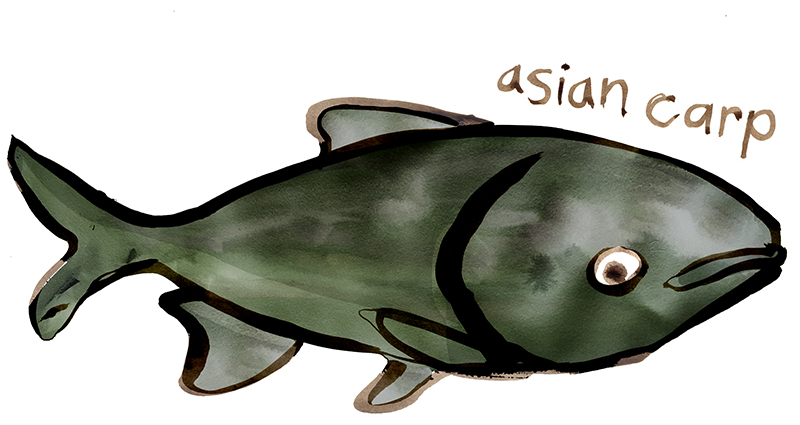
the fish population include (but are not limited to) largemouth bass, smallmouth bass, sunfish, catfish, trout, chain pickerel, american eels, carp and yellow perch. An occasional Pike and Musky have been taken out of the Raritan as well. The tidal portions of the river host migratory salt water species such as striped bass, fluke, winter flounder, weakfish and bluefish. Many nesting birds and water fowl make their homes in and along the length of the river. Crustaceans such as blue claw crab, fiddler crabs and green crabs are also found in the tidal sections of the river. Crayfish can be found further upstream. —wikipedia

We also saw huge mounds, made by beavers? muskrats? some sort of mound-builders. Industrious & industrial-sized!

This Sayreville Power House, the only building for miles around, is right next to the Sayreville public boat launch, surrounded by marsh grass and landfill. Electrical wires cross the horizon, the NJ Turnpike cuts the water. Still, there’s enough of solitude out here to imagine what it must have been like once upon a time.

(what is it? in the video clip, the structures visible when the birds are overhead in the sky are the transducer and the GPS unit mounted on the bow of the hydrosurveyboat, the Michele Jeanne. Upon the job site, the black transducer is lowered into the water and the white bulby Trimble DGPS antenna is placed right on top.)

happy new year: steam whistles & water worship

Posted in cibbows, coney island brighton beach by bowsprite on 2010/01/02

Happy New Year, Everyone! Happy, safe, blessed 2010!

Every new year’s eve at midnight, Conrad H. Milster, chief engineer of the Pratt Institute Power House, gives a steam whistle concert from the campus of Pratt Institute. 120 pounds of steam pressure release into the air, making the area resonate with a sound and power of a time now gone, and yet, preserved.

The engines are beautifully tended, “machinery that was built to be art.”

Milster was an engineer working on the ferries of NYHarbor in the ’50’s, and he has beautiful photographs of the old ferries. However, whistles are his passion. He has hours upon hours of recordings of whistles, and a collection of steam whistles of locomotives, factories, and ships–most notably, the whistle of la grande dame, the ocean liner S.S. Normandie.

“Here in the engine room, you see and hear motion, you smell the oil. The man who ran a steam engine saw how things worked. You were always adjusting the flow, checking the bearings, listening to the sound of the machine. To be a talented engineer, you have to emphathize with the machinery. If you have talent, the aesthetics of a good machine will grow on you.” Someone else waxed poetic on this very subject. (Quotes are from this article on Conrad.)

Here is a clip of the concert; the small whistles are controlled by a keyboard that anyone can plink on to let off steam, the larger whistles, by a rope to tug. DO bring ear plugs along with your champagne & glasses!

More clips! just a few hours later, these are from the Coney Island Polar Bear’s mad dash into the 39° waters:

This just in! for a lovely tribute to the midnight letting off of steam, see Rick’s video clip here. It was funny to run into my dear studiomates, Poul & Kayoko, friends Aki & Troy. Happy 2010 All!!!

happy holidays!

Posted in Uncategorized by bowsprite on 2009/12/20

& thank you!

boat time

Posted in USCG, dredges, safety, tugs, watercolor, drawing, boat, sketch, waterfront by bowsprite on 2009/12/15

This ship has a 12h watch system: 0600 to 1800, 1800 to 0600. The crew of 35 are on 6 weeks, off 6.
A front watch gets the sun. A back watch gets no sun–and no Captain down their backs.

This one is using a 7-5, 5-7 watch (0600-1300-1800-2300-0600), deviating slightly from the industry standard of 6/6.

This offshore tug has the luxury of a 3-watch system (the benefit of any voyage more than 600 nm): 4 on-8 off, 8 on-4 off.  Their breakdown is 0600-1000-1400-1800. “We do it this way so whoever cooks does not end up with the pots.”

You were on watch to see the sun rising, the smell of breakfast is cooking, the engine is loud, someone is hammering: it is time to go to bed.

I am not going to touch the fatigue issue on boats. However, I will direct you to some fascinating sites. The Nautical Institute urges mariners to report issues relating to fatigue as part of their database.

Peruse the USCG’s Crew Endurance Management literature. Reactions to it are on Towmasters and by NYTugmasters, with links to studies on the matter. Good reading on the experiences are found on Kennebec Captain and on Old Salt Shaker’s ‘rest in pieces’, ‘inhuman error’, and ‘groundhog day’.

A reference on these manning issues are here. Quite interesting is this 1984 case of seamen vs USCG. If you need help falling asleep, all the codes are collected here.

So, don’t request a tug to blow their horn as they go by: there is always someone trying to sleep. They fight constant noise, vibration, light, motion, odors; are interrupted by drills — I just cannot imagine it. As one chief mate puts it: “…bear in mind that we work aboard vessels that are essentially designed to collide with things…”

One offshore tug chief mate said, “I don’t know how harbor guys do it. I had to do it for 2 weeks, and at the end, I couldn’t remember my name.”

Another mate wrote: “It was a 2-watch system (captain, mate, two deckhands and an engineer) until the economy fell apart -  and then most ship assist tugs went to “singled-up” crews (captain, engineer, and deckhand) – don’t ask how they complied with work and fatigue…!”

Knowing all this, though, it still might help to take the advice of one well-meaning journalist girlfriend should you attempt to date someone who goes to sea/incommunicado for weeks at a time:

thank you Julie, Will, Jed, Robert, Wesley and O, Linked Ones!

a nautical bestiary

Posted in arts of the sailor, harbor wildlife, knots, new york harbor by bowsprite on 2009/12/07


bee

- a ring or hoop of wood or metal.

bitching

- not exclusively nautical, but rare is the ship without this; sounds like:
“I dont %&$&# LIKE sailing! Why don’t I go to the crafts festival and just take the train and meet you at the next %&$&# port?”
or “The hosting yacht club is serving ¿%&$&#what???”
or %&$&#! %&$&#! horse cock for dinner again??”

camels

- wooden (usually) platform buffers between a ship and a pier; way deeper and heavier to move than you think. On this camel by Passenger Ship Terminal pier 90, rope was shredded into a soft nest, eggs were laid, and the parents-to-be waited while warships of Fleet Week 2009 tied up a few feet away.

cathead

- a heavy beam projecting from each bow of a ship for the purpose of holding anchors.

clamshell dredge

cockbill

-an anchor is said to be cockbilled or a-cockbill when hung vertically by its ring stopper from a cathead ready for use, or, temporarily, during the recovery process.

constrictor knot

- not well known, but according to Hervey Garrett Smith, author and illustrator of the wonderful book, The Arts of the Sailor (1953), the constrictor knot is superior to most comment seizings or stoppings: “…quicker, neater, and can be drawn up more tightly. The harder you pull the two ends the tighter it grips, and it will not slacken when you let go…It can be set up so tightly that is is almost impossible to untie, and makes an excellent whipping. (The slipped version is easy to untie.) …Its superior construction and usefulness leads me to believe that it ultimately will achieve the popularity it rightly deserves.”

cow hitch

- also known in days of old as a lanyard hitch, the cow hitch is today more associated with any knot which is not a recognized maritime knot as used at sea; a lubberly hitch. Folks must be forgetting to use those lanyards.

crabbing

- sideways maneuvering into a cross current or wind to compensate for drift.
To “catch a crab” is to make a faulty stroke in rowing that causes the blade of the oar to strike the water on the recovery stroke.

cranes

crow feet

crow’s nest

doghouse

dogwatch

dolphins

- pilings lashed together with heavy cable upon which vessels land to moor. Usually, one piling is called a dolphin, a group of more than one pile is called a cluster, as in “put out a line over the second cluster off the bow.”  When neglected, provides fine nesting for birds of the harbor.

donkey engine

- a steam-powered winch to hoist sails and anchors on old schooners; an auxiliary engine on a sailing craft (which does propel the vessel) is still sometimes informally known as the donk.

elephant foot

elephant table – (help! cannot find this one!)


fishplate

fish tackle

- a large hook used to assist in maneuvering the anchor from under the cat-head, and brought to the side or gunwale, or to launch and recover boats.

flounder plate

- a triangular steel plate used as a central connecting point for the tows, bridles, and towline.

fluke

- the wedge-shaped part of an anchor’s arms that digs into the bottom. Sometimes painted yellow to lure full frontal admirers.

fox

- made by twisting together two or more rope-yarns. A Spanish fox is made by untwisting a single yarn and laying it up the contrary way. (But, why? ¿por qué?)

gooseneck

goosewing

hogged

- the state of a vessel when, by any strain, she is made to droop at each bow and stern, bringing her center up. Opposite of sagging.

horse

horse cock

- “phoney baloney”. Mmmmm.

hounds

leech

marlinspike, a marlinspike hitch

- a tool for opening the strands of a rope while splicing.


monkeyfist

- a weighted knot wrapped around lead or a ball, found at the end of a heaving line. Illegal in NYHarbor. ME variety is especially lethal: you really won’t know what hit you.

mousing

- a seizing to prevent hooks from unshipping. Sling hitch on the hook’s back, go around the bill, make turns, wrap with frapping turns, then a set of riding turns, finish with a square or reef knot. Notice how Hervey Garrett Smith draws the same hook three times; that is love.

pelican hook

- a hook-like device for holding the link of a chain or similar, and consisting of a long shackle with a hinged rod which is held closed by a ring.

pigtail hook

- a screw hook having an eye in the form of a spiral for holding a loop, chain link, etc., at any angle. I am not fooled: this was designed to snag my sweaters.

ratlines

- rope running across the shrouds horizontally like the rounds of a ladder and used to step upon in going aloft.

roach

- curved cut in edge of sail for preventing chafing

rhino horn

- slips through a hole in the bow ramp of the LCU or LCM to hold the landing craft in position while vehicles embark/debark.

sea cock

- a valve to open a pipe to allow suction of sea water into your vessel either to supply fire pumps or for cooling if your engine is cooled with raw water. Also used generically.

sheep-shank

- a kind of hitch or bend, used to shorten a rope temporarily.

sole

snaking, snaked whipping

- snaking protects against chafing of turns on whippings at the end of ropes.

whales

- fenders that were once upon a time real whale bodies, but today, are BIG black, heavy industrial strength rubber bumpers. One captain’s fender story is here.

wildcat

- oops. another wildcat coming up…

worming

- rigging of old ships were wormed, parcelled and served and lasted as long as the ships, or longer. Worming is the laying in of small-stuff between the strands of rope to fill in spaces to prevent moisture and rot. Parcelling is spirally wrapping rope with narrow strips of old canvas soaked with rigging tar, overlapping to repel moisture. Serving covers the rope by tightly winding marline or hemp against the lay. Heavily tar, and maintain regularly.

Worm and parcel with lay
Turn and serve the other way

zinc fish

- a “sacrificial anode.”  Metals (e.g. your propeller) in salt water, experience a flow of electrical current. The slow removal of metal is called “electrolysis”. Zinc is used as it has a higher voltage in the water so the current will tend to flow from it than from your props.

beasts of weather and water conditions:

dog days, ox-eye, mackerel scales, mares’ tails, white horses…

other waterborne beasts:

frogma, peconic puffin, the beagle project, the horse’s mouth (if any otters I missed, please do drop a lion.)

Thank you, again for everyone’s help! drawings will be added, and please report any missing strays. Thank you!

myths debunked: not all tallships people like sea shanteys

Posted in tallships by bowsprite on 2009/11/28

A beautiful tallship sailed into a particular harbor and tied up for a few day’s stay (name of vessel and port withheld until plied loose with drink.)

One day, a visitor approached the ship, identifying himself as part of a small singing group, “Could we come onto your ship and sing sea shanteys?”

“Get them away from me,” muttered the captain to his crew. The visitor was politely turned away with some sort of excuse, of a meeting or event, much apologies.

That evening, more shanteyeurs came to see if they could board the ship to sing sea shanteys.

“Sorry, not tonight, but maybe tomorrow.”

That night, the ship cast off and crept out to sea.

Reported by FL, a tallships sailor, so it’s got to be true. Thanx, Frank.

animals of the working harbor

Posted in arts of the sailor, equipment & gear, harbor wildlife, new york harbor by bowsprite on 2009/11/26

Happy Thanksgiving to all! Gratitude and homage to those working today, and a peek at the beasts of burden that aid them on the water:

This post is being updated with all your suggestions–Thank you! I’m stumped by some of them (Jed!!), and cannot find a few of the ones mentioned. The new post is “a nautical bestiary“.

Thank you, everyone, and ODocker, Kennebec Captain, Jed, Willi, PaulYar!, Marc, Tugster and Towmasters.

Posted in Uncategorized by bowsprite on 2009/11/15

vossparts

Warship 21, out to sea

Farewell, USS New York!

21atClock

0740h, ch13:  “Warship 21, Warship 21, changing speed to 10 knots, over.”

sailfish,ladyBbackground: USCGC Sailfish (WPB 87356), 87-foot Coastal Patrol Boat (WPB) – Marine Protector Class
foreground: Coast Guard Auxiliary boat Lady B, the former 82-foot U.S. Coast Guard cutter USCGC Point Brown (WPB-82362)

watertaxis

The USS New York makes calls after the Statue to tugs outside the KV, to the Staten Island Ferry, negotiating through another busy day :
ais

mysterytug(definitely NOT to be used for navigation! this AIS program is off by many minutes and does not read the signal from some ships. Notice: none of the official vessels are showing. Then, you have captains at anchor who don’t turn to ‘at anchor’ mode but drift in ‘underway’ mode, which is nice, because you can see them draw circles as the tides go in and out:)

before 0800h: “CG Sailfish, this is Warship 21: speed change to two-one, two-one, over.” And they go…out to sea.

aboard the Sturgeon Bay for the welcoming parade

SturgeonBay

On VHF 13: “Look at at that moon!” At 0604h in Bayonne, the moon was a half hidden, huge, beautiful orange glowing ball. Onboard the Sturgeon Bay, we sailed past Penobscot Bay and Katherine Walker, and south towards the Narrows to greet the PCU (pre-commissioning unit) New York. See Tugster for amazing photos and writings from the day; be sure to read the very good comments that Jed sends! & look at ShipShooter’s breathtaking aerial photos!

USS New York, LPD-21 will be commissioned tomorrow, Saturday November 7th at pier 88.

552

The harbor never really sleeps. I love the amber glow of the deck lights of the tugs.

amberlightsAt Global Marine Terminal (above), Cap Breton & OOCL Malaysia were being pushed into place. Below: Pearl Ace.

pearlace

As we neared the Verrazano Narrows bridge, we sailed in the midst of another working day on the harbor: a cruise ship, ferries, more tugs & barges, a CircleLine all moved along, doing their business. The battleship was in view, far away. Once we were in Lower Bay, the spray came flying in through here:

anchorlocker

anchor

At 0621h, Zachary Reinauer calls out and asks the Sturgeon Bay to switch to its working channel where it asks what its position in the parade is to be.

“Do you have the list of vessels and their orders?”

“We woke up to orders to be in the parade, so here we are. We do not know the order.” They fell in behind us. Pilot No. 1–the OTHER vessel named New York!–seemed to lead, followed closely by the pilot book Sandy Hook.

pilot1.

This is how I love the harbor: a big fuzzy flotilla of parading vessels, working vessels, fireboats spraying red, white and blue jets of water. Pleasure boats would get too close and get chased away by the swooping Defender class boats. A PT boat, a schooner, a sloop, even a duck boat made little appearances in the parade. Only missing the tallships.

pt728

sturgeonpathchart

Southbound barges seemed to collect as we neared the George Washington bridge. A couple of tugs and barges were anchored in the anchorage channel, but seemed to be VERY much too close. We were a fat parade, especially when the ships turned and we doubled in girth.

Rosemary McAllister and Ellen McAllister were there to assist when the PCU New York made her turns and docked at pier 88.

peeps

salute

0929h Sturgeon Bay to another CG vessel: “…pier sweep has been conducted…switching duties now, you may RTB (return to base) now.” We docked behind the Intrepid, and lunched and watched the boom go out as Houma delivered fuel.

galleyMeatball subs were served, and in the galley was a zipper sign that flashed: “Welcome to the Sturgeon Bay… I LUV BAYONNE”…Have a great Coast Guard day.”

As we returned to Bayonne and watched the skyline pass, a woman next to me said, “I used to work in the Chrysler building.” Her husband, a member of the Central Jersey Council of the Navy League, had fought in the Korean War. “He was on the LST 495. The men would joke it stood for ‘Long Slow Target.’”

The history of the LST is interesting, and here is a memorial museum to one of them.  Below, a schematic drawing from this tribute site:

schematic

This design became the roll-on, roll-offs in use today. How do they hold up? see the discussions on Kennebec Captain, see the pretty pictures on UglyShips part one & part two, and on Tugster (when I ask him where he’s hidden them).

LtRae

Many thanks, Lt. Rae and to your hospitable crew of the Sturgeon Bay! Thanks, Pamela, Lee & Will! hi, Jessica & Bob!ussNY21

VOSS

Posted in vessel of opportunity skimming system by bowsprite on 2009/10/30

voss

sorry! I’m going to get to this and finish this post! thanks for your patience!!

2009 World Maritime Day Parallel Event

The IMO (International Maritime Organization)’s 2009 World Maritime Day Parallel Event was held last weekend on Chelsea Piers:

chart

thomasjeffrsonNOAA Hydrographic Research Vessel
208′ Ship Thomas Jefferson
(
formerly one of three U.S. Navy survey ships, all named the USS Littlehales.)

rankinCoast Guard Buoy Tender
175-foot Keeper class Coastal Buoy Tender James Rankin (WLB 555)

bainbridgeCoast Guard Patrol Boat
110′ Island Class Patrol Boat Bainbridge Island (WPB 1343)

tempTug Boat
K-Sea Transportation Davis Sea

rb-mCoast Guard Medium Response Boat
45′ Response Boat-Medium (RB-M 45614)

Passenger Vessel: Statue Cruises ferry, Miss Gateway (sorry, not shown. She left before I could thaw out to draw her. Also, the advertised Staten Island ferry did not seem to be in attendance, but they are not far from this pier and our hearts.)

(not done yet! more to come on this event and the ships…)

junk in the harbor

12:53pm, this just in over VHF ch13:desk

Tug: “To the southbound Army Corps Of Engineers vessel.”

ACOE vessel responded (rather sure it was the Gelberman.)

Tug: “About a mile south of you, by Ellis Island, there’s a desk.”

ACOE: “A desk?

Tug: “Yes, a desk…and some telephone poles.”

ACOE: “OK, thank you.”

warshakers and peacemaker

(post in progress! colors and names of ships to come!)

352704707921921b

803Does the bow of Tromp look like a smiling shark?

I am not making it up:

IMG_2490

kvk picnic

Rendezvous with Tugster on a cloudy day to shipspot on the KVK.
Tugster: “Can you read what the name of that tanker is?”
I could, but I liked his version better.

icebabeIce Base (2008)

Type: oil tanker, double hull
Flag: Cyprus
Built by: STX Shipbuilding Co. Ltd, Pusan, South Korea
Length:      228 m / 748 ft
Breadth:    32.2 m / 105.6 ft
Depth:       19.1 m / 62.7 ft

orangewave

Orange Wave (1993)

Type: juice tanker
Flag: Monrovia
Built by: Sterkoder Shipbuilding A/S – Kristiansund, Norway
Length:    157 m / 515 ft
Breadth:  26 m / 85.3 ft
Depth:     6.6 m / 21.7 ft
DWT: 16.700 tons

Need a ship identified? call Tugster. Need a photo of a ship? Need information on a ship? call him! Among what he can dig up:

Orange Sun, Orange Blossom, Orange Star, Orange sterns, Orange othersOrange you glad we have Tugster?

hickory dickory O Docker

Posted in waterfront event by bowsprite on 2009/09/23

Hello, WaterLovers & Hydrophobes alike! There is a commentator that was such a voice in the waterblogged community that I had him on my blogroll even though he did not have a blog.

Now, however…it has been launched:

champagnebow

The blog of the Unblogger (this is the brilliant name Tillerman gave him), ODocker! ODock is a brand new blog. As of presstime, there are four posts up, and 74 comments. Voilà.

OSV Bold

before the makeover – United States Naval Ship Vigorous (1989), a Tactical Auxiliary General Ocean Survey class vessel:

vigorous

after the makeover, now – Ocean Survey Vessel Bold of the EPA (Environmental Protection Agency) (since 2004):

bold

OSV Bold

Built: 1989 at Tacoma Boat Building Company,  Washington
Overall Length: 224 feet
Width: 43 feet
Draft: 15 feet
Displacement: 2300 tons
Speed, Sustained: 11 knots
Ship Operating Crew: 19
Scientists: 20

The OSV Bold monitors and assesses the health of ocean and coastal waters, and the standards to which they aspire others to have, they hold for themselves.

They follow safe discharge practices (of blackwater, greywater, oils & greases, lab chemicals, and ballast water), emit low sulfur dioxide, and are compliant with the International Maritime Organization’s International Convention of the Control of Harmful Anti-fouling Systems on Ships by using a hull coating that does not contain organotin pesticides and has a low copper leach rate.

grabber

Bottomgrab, otter trawl (not for otters, but fish), a rocking chair dredge are deployed from the A-frame to collect samples which are studied in the wet and dry labs onboard.

towfishThe side scan sonar, towed behind the vessel, produces digital acoustic images of the ocean floor and can echo back a signal up to a depth of 300′. CTDA water profiler, the CTD device, measures physical water characteristics throughout a column of water in real-time. A camera behind a glass (not shown), captures images of the sediment profile layer, cutting through ocean floor and peeking at denizens’ burrows, grain size, et cetera.

The Bold was docked briefly this week for tours at Pier 17. For more information and schedule at other ports, look at their website and their official blog. And see it Tugsterized.

Happy Harbor Week!

NYHarbor was busy this week, and here are some of the highlights where partyers, stately visitors, and working mariners made it work, swimmingly:

12sept09 Saturday, 1411h  – “Requesting slow bell in the Buttermilk Channel for a flotilla of historic Dutch vessels visiting, requesting slow bell in the Buttermilk until 1500.”

dutchboats1

Then, the navy vessels go by:

navyshipsline

WaterTaxi to the Coast Guard Cutter (paraphrased): “Oh, please, please, may I go inbetween the navy ships? i’m just crossing the river.”

Coast Guard Cutter (verbatim): No. Denied. Forbidden. “You can stay where you are or you can go to the end and take the stern of the last vessel, but you may not cut through the parade.” The ships went by slowly, and the taxi was like a little boy who has to go the bathroom very, very badly, but could not.

4164352357704707803c828861

The ships went up as north as the 79th boat basin, turned and went south. Here, one passes Pier 40, home to the Steamship Lilac and Fireboat John D. McKean:

pier40

Little Flying Dutchmen joined the parade:

flying dutchmen

Cargo ship Ocean Atlas steamed south alongside the Sloop Clearwater, calling out 5 bells to warn sailing vessels ahead:

clearwater.oceanatlasOcean Atlas (120m x 20m; draught 7.7m, destination Houston)

What ship is this?

qui

Then, a call on VHF 13: “A flotilla in the mooring!”

flotillaCG

The working harbor draws comparisons of the regatta to Nature: “Yeah, watch out, I got a lot of fleas here on my right.”

flotillamooring

“Uh, Heyward, I’m going to go south of these mosquitos, see you on the 2.”

flotillastatue

(The views expressed here are not the opinions of the blogger, who rather saves the discourtesy for the cigarette boats.)

flotillabattery2This view is looking south, where the regatta is at the Battery. The hexagonal stupa is the Holocaust Museum, the patina’d copper green topped roof and tower is Pier A, the old fireboat station. The strip of land midground is Governor’s Island. The waters are the deep water range (fore), and Buttermilk Channel (behind).  The background land is Brooklyn. The Verrazano-Narrows Bridge straddles Bay Ridge, Brooklyn to the left and Staten Island to the right.

Sunday: Harbor Day. The morning started calmly with Half Moon and Tromp riding between Penobscot Bay and Thunder Bay. Hawser 65610 was also in service.

halfmoon803CG

Sorensen Miller brought a large number of passengers onto the Warship Tromp.

sorensenmiller

sorensenout2 The USCG Cutter Penobscot Bay began to announce on ch13 that a security zone would be in effect from 1100 until 1600: no traffic allowed on north river during that time, from the Battery to Berth 64 (about 24th street.) The announcement was made at intervals.

catherding2KP: “Kimberly Poling is in the ConHook Range, splitting the 29 and the KV buoy, headed up the north river.”
CGPB: “Kimberly Poling, this is CG Cutter Penobscot Bay, you going all the way through?”
KP: “Oh, yes, sir, I’m going to Albany, to Rensselaer.”
CGPB: “OK, well, please hug the Manhattan side.”
KP: “Very good.”
CGPB: “Thank you, have a good day.”
KP: “You too.”

kimberlypolling

KP (to buddy on radio): “Yeah, I just made it before they closed.” “You’re lucky.”

Another vessel is not as content: a series of insistent 5 blasts were made as boats were right in front of its path (photo is taken when they just cleared away.)

arcadia803

Arcadia, faltering: “I..I can’t believe you just crossed my bow like that…”

arcadia

1003h  “Don, what are you doing, cooking everybody’s pop tarts with that radar?”
“Oh, you like that screen, huh?”

Minerva Zoe, in the ConHook Range, headed out to sea.”

1045h “Jervis Bay (cargo) is at the KV buoy, inbound for Port Elizabeth.”
1109h Half Moon and Onrust announce they are about to fire guns. I never did hear them.
McKean: “Yeah, you can pump 25.”

Marjorie McAllister uncomplainingly steers with a partially loaded barge and heads south.

marjorieCircus

marjoriemcallister2

Unknown: “Can you go 1 whistle? we’re going to raise an RHA on the starboard side.” (–what is an RHA?)
Containership Bauci: “We’re coming on the 28 here, see you on the one.”

statenferryWhich tallship is motoring without sails set? yes, Clipper City.

1100h - Penobscot Bay declares on ch13 the security zone is in effect, “closing North River from the Battery across to Morris Canal, Jersey City. The south marker is this unit, Penobscot Bay. The north marker is Thunder Bay, a straight line across berth 64.”

Despite the warnings all morning, boats call out.

Penobscot Bay, we need to refuel at Morris Canal…”

“…requesting to transit north to North Cove…”

Penobscot Bay, we need to get across the river to the Battery…”

“…do you have a radio on there?” (If this does not elicit a response, try to talk louder.)

Penobscot Bay responds to almost all of them, and repeats: “… you will have to wait until the end of the race, at 1600.” “If you do not have a flag, you may not enter the security zone…” “Negative, you may not enter the security zone…”

sundry tugmen: “How about some working channels here?” “Wouldn’t it be nice to have a race channel on the working harbor?”northriver

The DEP’s North River, going on North River after the security zone is in effect.

to be continued…

fun with vocabulary

Posted in tanker, tankers, tugs, watercolor, drawing, boat, sketch, waterfront by bowsprite on 2009/08/31

mullion

“The panes were finally removed. Alas, we had not calculated for the mullion, and the surprise was further delayed.”

bollardpull hpHildegard had more horsepower, but Gigi topped the tons in bollard pull, and the two were in a catty fight to spin the tanker either clockwise or counterclockwise.”

caternary

“She failed inspection miserably, even being faulted for sloppy catenary.”   Need your catenary calculated? book an appointment with the DoryMan.

disclaimer: usage might be wrong, corrections gratefully accepted.

Central New Jersey Rail Road Terminal, Jersey City

Voilà, the gem of Liberty State Park!

cnjrr

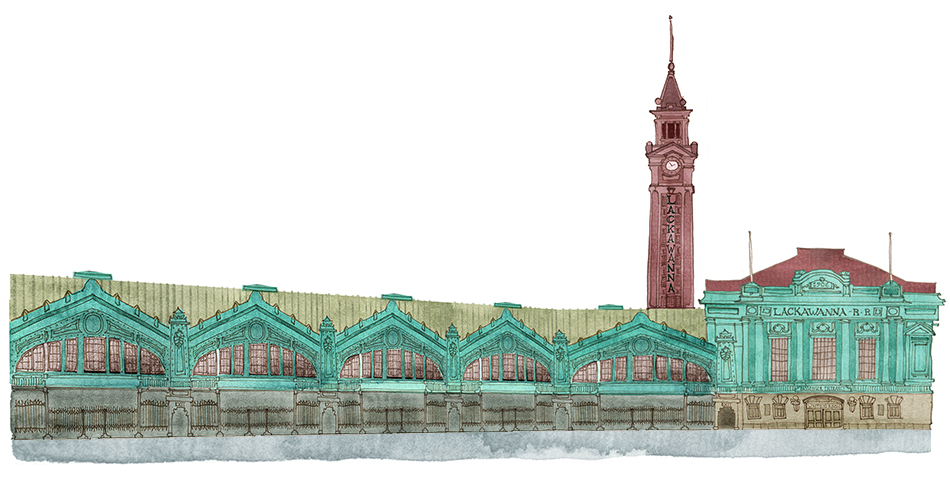
The Central New Jersey Rail Road terminal (1889), also known as Communipaw Terminal is one of the most beautiful buildings of New York Harbor. Twenty tracks and four ferry slips provided the terminal with streams of cargo, supplies, passengers, workers. The palatial waiting room has a gabled ceiling three stories high and the most grand view of Upper Bay and the Manhattan and Brooklyn skylines; it now houses Liberty State Park’s Visitor Center. Statue of Liberty ferries leave from the slips.

However, the treasure lies behind this elegantly proportioned and well-maintained edifice:

cnjrrjardin

the old tracks are overrun by a jungle of native flora, Nature come to reclaim her domain. Twenty tracks of young trees, tall grasses and weeds flourish, the dark old steel structures are lost amid the riotous green, the sidewalk cracks are colored in by little grasses and sprouts. A beautiful light filters evenly through the open trestles. It is dramatic in full sun, and magical on grey days:

(if it weren’t foggy, you’d have seen lower manhattan when the camera turned west at 0:25, looking out the building)

Nature’s indefatigable force is inspiring. Nothing we make–with all our might!–is going to last. No better proof exists than in the photographs of shipbreaking captured by Edward Burtynsky and Andrew Bell. Or, in the quieter photographs our own Tugster, closer to home, in the Kill van Kull. Yes, worms, rust and seagull droppings are maddening! But, mainly because we are fighting it. This is not comforting if you have a train to catch, a shipment to make, a twitter to tweet, a family to clothe, shelter and feed in our times and to current standards.

What will last? Nature. Of which we can still claim to be a part, despite all our efforts. The way we have organized ourselves, we cannot live the way it was intended, but maybe we can eek eke (thx, Porter!) out a bit of time to live naturally, and, as time is really all we have, spend it well…bring your family, friends over to the rail road tracks, peek through the temporary (it’s all relative) iron gates, and be filled with awe of and reverence for Nature. (Ok: look at the weeds, if you’re cynical.)

“Nature is not a place to visit, it is home…” Gary Snyder, The Practice of the Wild

how to be paranoid: seeing RTK systems

Posted in Uncategorized by bowsprite on 2009/08/11

The boat behind us in the channel was gaining speed. A RTK (real time kinematic) Short Baseline GPS system was spotted: what kind of survey boat was this?!? and a fishing rod amid the tide gauges elevation rods?

them

As the boat  overtook us, it was registered that it was not the receiver of the very high-tech, expensive GPS system, but a scrub brush.

Coney Island Brighton Beach Open Water Swimmers’ race: Grimaldo’s Mile!

Posted in cibbows, coney island brighton beach, swim, water quality by bowsprite on 2009/08/10

The Coney Island Brighton Beach Open Water Swimmers‘ annual 1 mile race was held yesterday, Sunday.  They hold several public races, and swim every weekend. Swim buddies are available if you are interested in swimming at any time: pre-dawn, midnight, throughout the winter, et cetera. Contact them here for anything at all! they are a very open, welcoming group of waterlovers.

Grimaldo, for whom the race is named, was the lifeguard who first made it possible for the group to swim beyond the jetties. Vibrant, joyous and ebullient, he passed away in April to leukemia, but his personality is still felt at his chair at Brighton 4th street, where the swim group meets and where people congregate.

Come swim!

How is the quality? you could go here to find readings…Or not: follow Sebago’s links. Other hazards? sharks? yes, well, they will leave you alone (not you, Michael). Jellyfish? a few float by, intermittently. The Coney Island Whitefish? they also float by, but being usually latex and inert, are harmless. Your worse danger: jetskiers coming at you at high speed with the light behind you and in their eyes!

Lightship Winter Quarter LV107, Jersey City

Posted in Uncategorized by bowsprite on 2009/07/30

winterquarters

The lightship Winter Quarter, that graced the Winter Quarter shoals in Virginia, is now berthed permanently in Liberty Landing Marina, Jersey City. Statue of Liberty ferries Miss Liberty (rear) and Miss Gateway (fore).

Sketched while waiting for the Liberty State Park ferry. The ferry captain said, “It had a great bar. Was a vicious cycle: work, get paid, go the bar, work, get paid, then go to the bar…”

Winter Quarter LV 107 (1923)
Builder: Bath Iron Works, ME
Length: 132′4″
Beam: 30′
Draft: 14′7″
Displacement: 775 tons

off topic: Home, Cafe Luz

Posted in Uncategorized by bowsprite on 2009/07/25

henri

What would Henry post? 400 years ago today, he was here…on the way to where I call home, and to where I shall return tomorrow, sunday!

Home! but, where is home?

Take a look at our HOME, as seen by the french photographer Yann Arthus-Bertrand:

¡ah! some countries cannot view this. The aerial photography is stunning. (Oh well, the tanker looks GOOD.) Try this link: http://www.youtube.com/watch?v=jqxENMKaeCU

The film in its entirety is viewable in Europe on Youtube and is much discussed. Hope you can see it; it is 1hr 33mins long.

Quite a shock to see in this film the bare black mountaintops of what was once white. From where I am, I can see the glacier of Bondasca, happily replenished with a light dusting of snow so the village fountains may continue to flow with water for a bit longer. However, the neighboring glacier of the Cengalo is gone (a map from 1936 shows it was still there then).

In the meantime, as a souvenir from the alpine region, here is my favorite recipe for Cafe Luz, or Cafe Fertig. I got this from my friend and studiomate, Poul–a Dane–so, coffee with schnapps must be a Continental thing:

luz11. Put a coin on the bottom of a cup.

luz2

2. Cover the coin with HOT coffee until you cannot see the coin anymore.

luz3

3. Add schnapps until you can see the coin again. Or until you will overflow the cup. Add whipped cream on top.

Barbara: “If you use Turkish coffee, you might need a great deal of schnapps.”
…perhaps to no avail, for the coin will have disintegrated! Thank you, Barbara (environmentalist, activist, lawyer from Geneva), for telling me about “HOME”.

Steamships of Lake Geneva, Switzerland

Posted in OffTopic: not in NYHarbor, paddleboat, steamships by bowsprite on 2009/07/16


I am in Switzerland!

And on my first day, I went to the doctor’s. (Swim in a marina at your own risk, for where boats lie, anti-fouling particles, oil, and foul matters from neighbors who do not pump out will surround you. I think I got hit by the latter, in the ear.) 

In Dr. Hans Bänninger’s office was a book: A History of the Compagnie Generale de Navigation sur le lac Léman. It is a book on the lake fleet of paddelwheel steamers on Lake Geneva.

Italie

M/S Italie 1908 – decommissioned, but still floating around.
Paddlewheel, compound engine with double expansion, two equal high-pressure cylinders. Converted in 1958 to 8-cylinder, diesel electric.

length: 66m / 216.5′
breadth: 14m / 45.9′
displacement: 296t 
ship depth, fully loaded: 1,51m / 5′
passengers capacity: 800
crew: 4 


suisse

S/S La Suisse 1910 – the flagship of the fleet and still running! (done in a looser  style)
Paddlewheel, one bow thruster; original 2 cylinder compound engine with double-expansion (one small high-pressure cylinder and one large low-pressure cylinder, each driving the pistons and the crankshaft with the same stroke.)

length: 78,5m / 257.6′
breadth: 15,9m / 52.2′
displacement: 518 t
ship depth, fully loaded: 1,61m / 5.3′
passengers capacity: 900
crew: 7 

1n 1808, the Albany was the first paddle steamer which steamed along the Hudson to the coast of the Delaware River. 

Steamboat technology came to Switzerland in the shape of the Guillaume Tell on Lake Geneva in 1823. Her wooden hull was from Bordeaux, her engine from Liverpool. Escher Wyss in Zürich built the next few steamboats. Eventually the shipbuilding came to rest in a place with a great name for a shipyard: Ouchy! ha! however, it’s pronounced ‘Oo-she,’ like “who she?” minus the ‘wh’.

Many little companies competed on the lake until 1873, when the Compagnie Generale de Navigation sur le lac Léman (CGN) was formed to better compete against the railway. Their fleet grew and shrank over the years with their fortunes (in 1963-1964, they were 22 ships strong). But, they exist and persist, and some of the beauties are still running. The old ones are called the Belle Epoque ships.

La Belle Époque was a shimmery period (for the rich) from about 1890—when champagne was perfected!—until 1914: World War I. In the book are photographs of grand dining rooms, wooden ceilings and panellings with intricate inlaid work, exquisite brasswork, rounded steps with the name of the ships in brass on every step, hand-blown glass lamps and sconces, luxurious fabrics on banquettes and chairs, and potted palms.

The engine rooms are lovingly beautiful, captured in a romantic sepia glow at a time when steam and coal were used and when such engineering was a form of high art. 

Some ships that were converted to diesel electric in the 1930’s (like the Italie) were part of a grand plan to return to steam in 1998. In 2001, the re-steamed Montreux was inaugurated with fanfare and a popular ‘gourmand-cruise’, however the costs of re-steaming three other Belle Epoque ships proved daunting, and the plan was dropped. The fate of the old ships seemed gloomy until steamboat lovers banded together in 2002 to form the Association des amis des bateaux a vapeur du Léman, the Friends of the Steamboats of Léman (ABVL).

Dr. Bänninger is a member of the ABVL, and he gave me the book from which these drawings and information come.  Merci millefois, Dr. Bänninger! for this book, and the ear drops!


lake geneva

from the CGN site:

“With a total surface area of 582.4 square kilometres (348 in Switzerland and 234 in France), the lake is 72.3 kilometres long, and averages 10 km wide (minimum width 8 km, maximum 13.8 km). Its maximum depth is 309.7 metres and it has 167 km of coastline. Its surface is 372.3 metres above sea level in summer and a metre lower in winter. The water is clear to a depth of 6.5 to 7.5 metres, depending on season and location.”

Click here to see their winter, autumn, and summer runs.


vitesse

doucement – “sweetly” ! 
demi vitesse – half speed
en route – full speed
en avant – forward
en arrière – backward

the Kill Van Kull Security Zone

Posted in Vessel Traffic Service, dredges, kill van kull, new york harbor, shipping, tankers, tugs, vhf by bowsprite on 2009/07/09

Vessel Traffic Service announced on VHF 13 that all tugs and barges longer than 400′ may not meet or overtake other vessels in the KV. Curious, I called VTS  (718.354.4088).

“Yes. No meeting, no passing from KV buoy 1 to KV buoy 5 for all vessels longer than 400′ and deep draft vessels.” The three buoys have been moved 600′ to the north of their original positions last week, and it became mandatory for large vessels to observe one-way traffic until further notice.

kvchart

The Kill van Kull was once at a natural depth of 15-18′, and home to rich beds of oysters, clams, and fishes, surrounded by salt marshlands. Today, dredged to 50′ below mean low water, it is a major shipping channel, making it possible to bring in imported goods, cars, fuel, chemicals, orange juice, and to ship out our recyclables.

The Army Corps of Engineers, with the Port Authority of New York and New Jersey, has been working on the Harbor Deepening Project since the 1980’s. They have had to contend with a bottom made of soft and stiff clays, red shale, serpentine rock, glacial till, and granite. Different kinds of dredges are used for the different materials.

kvk4

What is happening now is quite special: We’re in the final deepening phase off St. George, the dredgers have encountered bedrock, and a unique use of equipment is at play (oh, I mean ‘work’)…

cutterhead

“That cutter-head begs to serve as inspiration for a horror movie.” – Tugster

The hydraulic dredge, the Illinois was described by Bill as a “floating factory;” it is huge.

Hydraulic dredges usually use a cutting head to dislodge the sediment which is immediately suctioned and pumped through a pipeline to an offsite settling area, often several thousand feet away.

However, working boats in the area have noticed an absence of the pipeline. If there is no dredge spoil, then there must be no dredging. That cutter-head seems to be drilling away at pure bedrock (instead of blasting). Dredge 54 comes along behind it to dig it up. A support barge is there to replace the hard teeth on the cutter head.

What has been the observed result of the dredging of NYHarbor?
° Working mariners have noticed that the current has increased, and that high and low tides have been affected. Those Eldridge tide predictions are no longer accurate in places.
° Docking seems to be more dangerous, but if you dock only at slackwater, you might have several hours to wait, which would cost more money.

Tugster, who caught amazing photos of the machines and vessels at work, poses two questions:

1. what would happen if dredging activities ceased?  Not sure how fast it fills in here, but several points along the east side of North River silt in as quickly as about 2 a year. The way things are set up now, our harbor cannot afford not to dredge. (And, dredging is expensive! that’s fine if your project enjoys federal, state, or city funding, but what if you are a mom&pop little shipyard? you are between bedrock and a hard place: you cannot afford to dredge, but you cannot afford not to!)

…alternatively, if we stopped dredging, the kill would become a kill again (creek in dutch), oysters, clams and mussels would be sold alongside hotdogs, and you’d have to take a train to Baltimore to get those plastic lawn chairs.

2. “How come the mainstream media pays no attention to these activities?” Really cannot fathom, because it is fascinating. Go and look for yourself: the very best deal of the harbor, the Staten Island Ferries, will take you past the dredging site–for free!

Thank you, Bill & Will!

Oops, this just in: Tugster reports that the Illinois is not there anymore. I’m very sorry, they were never vigilant about their AIS.

You will still see the Dredge 54, but this is how the Illinois looked from one of Tugster’s photos:

illinoisside